
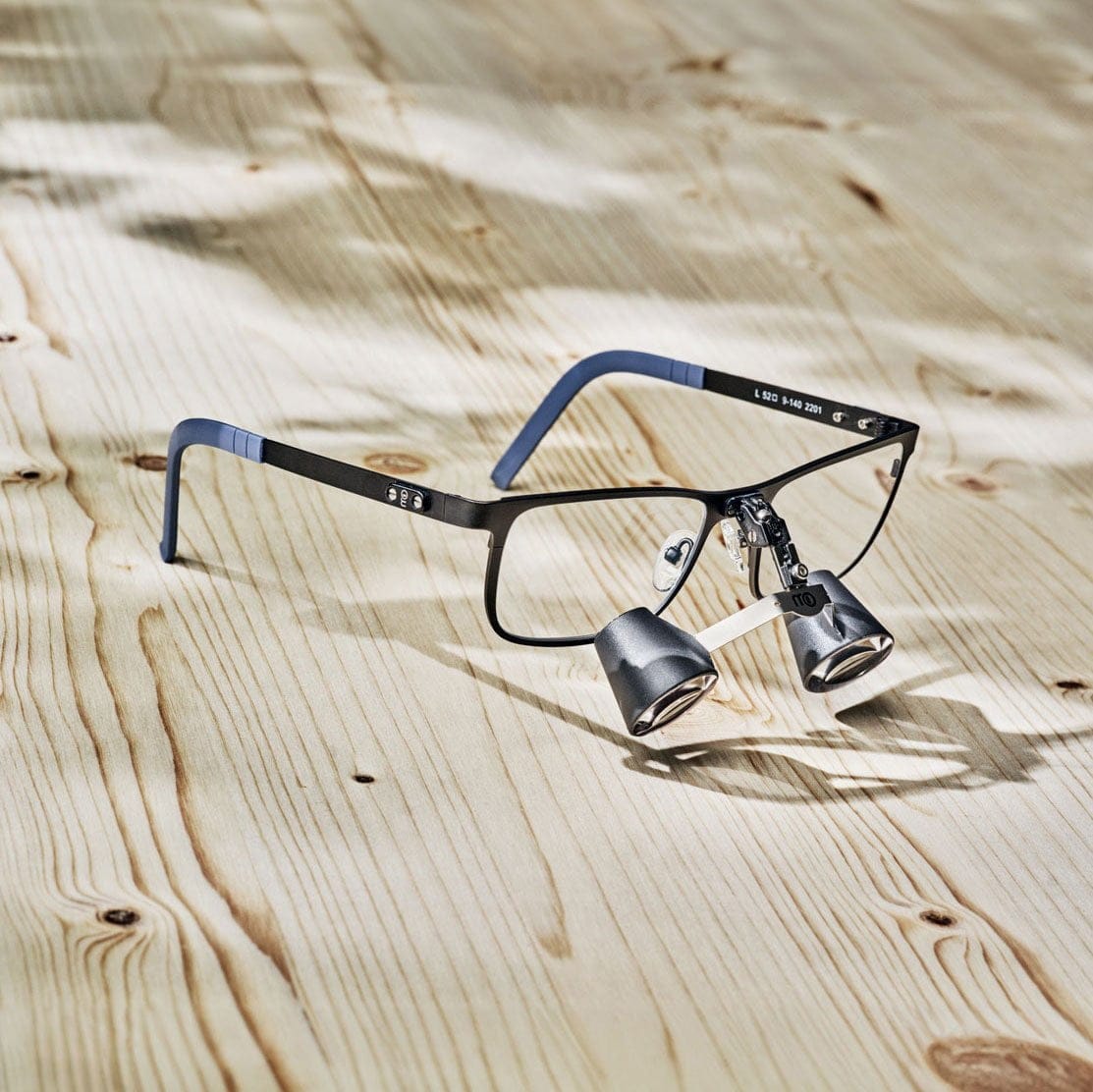
Optergo Ultralight™ flip-up
Optergo AB
Collecté automatiquement depuis optergo.com
Vous êtes le fabricant ?Transmettez vos données
Texte du fabricant en anglais
The Optergo® Ultralight Flip-up loupes weigh only 11 grams! Magnification is available on-demand and the telescopes are easy to turn completely away from the field of vision. With this solution you no longer need to switch between different glasses during the work day.
Magnification
Optergo Ultralight™ flip-up and TTL has Galilean-type binoculars. The color dispersion of the magnified image is minimized with an achromatic lens system. Coated glass lenses, together with the treatment of the binoculars' interior surfaces, effectively eliminate reflections. The result is a sharp and bright image with exceptionally lightweight optics. The field of view and depth of focus for the loupes are determined by the type, size, and magnification of the loupe. Optergo Ultralight™ flip-up and TTL are available in three different models:
ENSI
- Magnification: 2.1x (angular)
- Field of view ~12 cm
- Depth of focus ~30 cm
EASY
- Magnification: 2.6x (angular)
- Field of view ~10 cm
- Depth of focus ~25 cm
ERGO
- Magnification: 3.2x (angular)
- Field of view ~8 cm
- Depth of focus ~15 cm
Compatible lens types
Optergo Ultralight™ flip-up and TTL loupes can be used in combination with all types of eyeglass lenses, allowing functional vision solutions even in the most challenging work environments.
Single vision eyeglass lenses
A single vision lens has the same corrective power over the entire surface, which means that the field of vision covers the entire lens. Single vision lenses work great when you don't need an addition to see up close. If sharper near vision is needed, single vision lenses allow for a limited ability to see clearly at a distance.
Bifocal eyeglass lenses
The correction for near vision in the lower part of the bifocal lens is made for the working distance, and the surrounding part can be customized for your distance vision – typically for instruments or a computer screen. The advantages of bifocal lenses include broad and clear fields of vision for both viewing distances. The disadvantage is that vision at a distance may be limited if the surrounding lens is made with a power for intermediate distances.
Progressive eyeglass lenses
The correction for near vision in the lower part of the lens decreases progressively toward the upper edge of the lens, providing visual acuity for longer distances in the upper part of the lens. The most effective progressive lenses at room distances are so-called multifocal lenses for office use/amplified reading glasses. In these lenses, the typically narrow field of vision for progressives can be made wider by omitting the area for long distances in the upper part of the lens. At the same time, the change in lens power decreases, making it easier to see different objects.
ErgoLens
The ErgoSeg in the lower part of the ErgoLens lifts the image upward, reducing the need for neck bending during close-up work. The upper part of the lens can be customized as plano, single vision, or progressive, depending on the user's visual needs. This allows the ErgoLens to provide clear and comfortable vision for near, intermediate, and distance viewing while also supporting a more ergonomic working posture.
Prism optics
The eyeglass lenses can be made with an image-shifting prism segment. This reduces the need to bend the neck when looking downward. With Optergo Ultralight™ flip-up loupes, prism ergonomic benefits are achieved, even when working without magnification.
Truly personalized work tools
What you get from us is tailored for your eyes alone, for your work, your performance, and your well-being. Designed to suit just you and nobody else.
Informations produit
| Fabricant | Optergo AB |
|---|